Replacing a Light Fixture With a Ceiling Fan
Here in Florida, cooling our homes and businesses amounts to a large part of our energy expenditures. In order to save on air conditioning costs, you might be thinking about installing a ceiling fan. This energy-saving, practical method of cooling not only gives your air conditioner a break, but it can also do wonders for the aesthetics of your room. Maybe your lighting is outdated, and you’re wondering if you can replace a light fixture with a ceiling fan. The answer is, as a rule, yes. However, there are some things you should consider before upgrading your light fixture to a practical fan.
Mounting
Most light fixtures only need a mounting bracket that supports the weight of the fixture alone. Contrast that with a ceiling fan, which requires a stronger bracket and electrical box that can safely and securely support the fan’s constant vibrating motions.
Wiring
You may need to upgrade the present wiring to accommodate a ceiling fan, especially if you want one that includes lighting.
Fan Size
When choosing your fan, you also need to consider the size of your room. A living room will obviously require a fan with longer blades than would a small bedroom. For more efficient cooling, two fans might be better for a large family room. Fan blade lengths generally range from 36 inches to over 50 inches.
Ceiling Height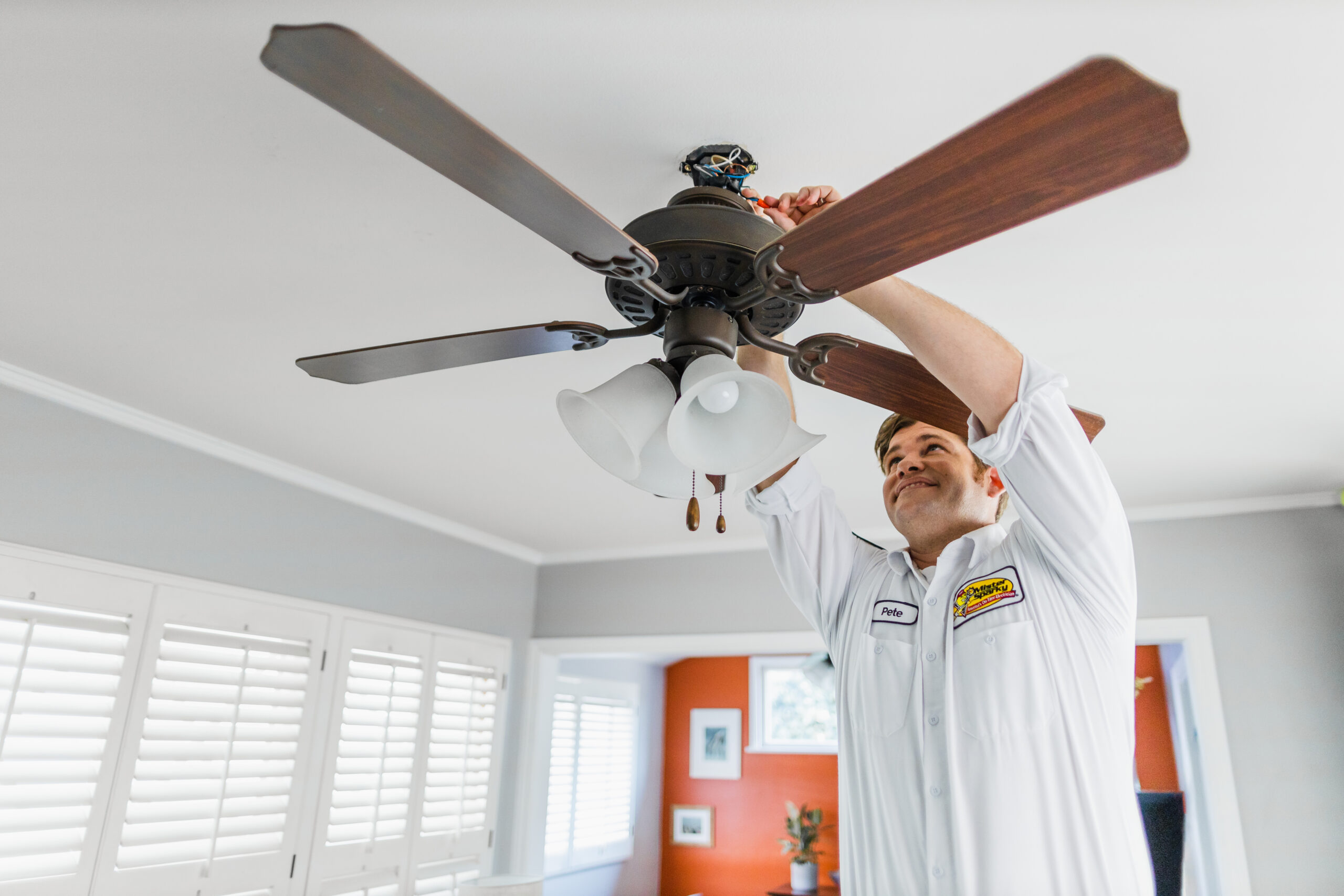
Generally, your ceiling should be at least eight feet high in order for a fan to safely and efficiently operate. If your room features a relatively low ceiling, a flush mount might be a safer and more effective alternative. If, however, your room features vaulted ceilings, a longer downrod mount is preferable.
Indoors or Out?
Not only is the size of the space where you install your fan of importance, but the environment is, as well. You need to take into consideration whether your fan will be indoors or out; and if indoors, how much humidity is present. Fans are rated by the amount of humidity they can tolerate. For example, if your fan is to be installed in a bathroom, you’ll need one that’s rated suitable for a damp area.
Choose Professionals for the Job
You’re ready to replace a light fixture with a ceiling fan. You’re even thinking about tackling the job yourself. Remember, though, that electrical work can be challenging, if not dangerous, for the average homeowner. Why not choose a professional to install your ceiling fan?
Our team of local licensed electricians are here to efficiently replace the outdated light fixture with an attractive contemporary ceiling fan. We’ll help you pick out a fan that’s appropriate for your room, all while easily staying within your budget. Our skilled electricians will then professionally install your new fan in no time and finally make sure it’s running safely and effectively.
You might be tempted to try a DIY project to install your new ceiling fan, but your time and safety are invaluable. We’re here to spare you of that headache. Don’t put up with any malarky, call Mister Sparky!
Ceiling Fan Installation FAQ
Can I replace a light fixture with a ceiling fan?
Yes, in most cases you can. However, there are several important factors to consider before making the switch.
Will I need a new mounting bracket?
Most likely, yes. Standard light fixture brackets aren’t designed to handle the constant vibrating motion of a ceiling fan. You’ll need a stronger bracket and electrical box rated to support a fan’s weight and movement.
Do I need to upgrade my wiring?
Possibly. Existing wiring may need to be upgraded to handle a ceiling fan, particularly if you want a model that includes a built-in light.
What size fan do I need?
It depends on your room size. Fan blade lengths typically range from 36 inches to over 50 inches. Larger spaces like family rooms may even benefit from two fans for more efficient cooling.
Does ceiling height mat£ter?
Yes. Your ceiling should be at least 8 feet high for safe, efficient operation. Low ceilings call for a flush mount fan, while vaulted ceilings are better suited to a longer downrod mount.
Can I install a ceiling fan outdoors or in a humid area?
Yes, but you’ll need a fan rated for that environment. Fans are rated by the level of humidity they can handle, so a bathroom or outdoor space will require a fan specifically rated for damp or wet conditions.
Should I hire a professional to install my ceiling fan?
It’s strongly recommended. Electrical work can be hazardous for the average homeowner. A licensed electrician can ensure your fan is installed safely, correctly, and up to code.
